Export Gmail Emails to CSV with Attachments: Complete Guide

Neeru Kuchhal

August 14th, 2026
User-Query:
“I have thousands of Gmail emails containing important business data and attachments. I want to share them into CSV format for reporting, backup, and data management purposes without losing important information. What is the easiest way to export Gmail emails to CSV with attachments on Mac?”
— Posted by “Ryan Cooper”
Introduction: Gmail is the most widely used email platform for personal and business communication. Users often store their data inside their Gmail accounts. However, there are situations where users need mailbox data in a spreadsheet-friendly format for analysis, documentation, or migration purposes. While CSV is used for storing structured information and can be opened easily in spreadsheet applications. Therefore, exporting Gmail to CSV helps users organize email data, create reports, manage records, and maintain backups.
That is the reason this guide explains the different methods to export Gmail emails as CSV. Along with this, it covers the process of using the MacSonik Gmail Backup Tool.
Gmail Backup vs. CSV Export: Choosing the Right Data Format
|
Key Determinants |
Gmail |
CSV |
|
Cloud mailbox |
Spreadsheet file |
|
Internet dependent |
Offline access |
|
Email messages |
Structured data rows |
|
Supported |
Stored separately or referenced |
|
Communication |
Reporting and data management |
|
Email platforms |
Spreadsheet and database tools |
Why You Should Convert Your Gmail History into a Structured CSV File?
There are many reasons why users want to export Gmail emails to CSV:
- Create email reports and spreadsheets.
- For maintaining business records.
- Analyzing communication history.
- Organizing email information efficiently.
- To prepare data for CRM or databases.
- Also, to create secure mailbox documentation.
How to Convert Native Gmail Archives into Spreadsheets Manually?
Instead of using external or third-party applications, you can convert Gmail email to CSV manually. Therefore, note that this technique is very time-consuming and prone to errors.
Method: Use Google Takeout for Gmail Data Export
- Firstly, sign in to your Gmail account.
- Open Google Takeout settings.
- Select Gmail data for export.
- Choose the export format and create an archive.
- Download exported mailbox data.
- Lastly, process and organize required email information into CSV format manually.
Barriers to Manually Export Gmail Emails to CSV
|
How to Automatically Export Emails from Gmail to CSV Using Software?
Want to get out of manual barriers? Use the MacSonik Gmail Backup Tool for a fast and secure export process. This efficient software helps users complete this task directly while maintaining important email information and attachment handling. It supports bulk processing and ensures an accurate export without modifying original mailbox data. Along with CSV export, it also enables users to backup Gmail emails to PST and more formats with zero data loss.
Advanced Features of MacSonik Software
|
Export Gmail Emails to CSV: The Definitive Walkthrough
- Start by launching the MacSonik Gmail Backup Tool.
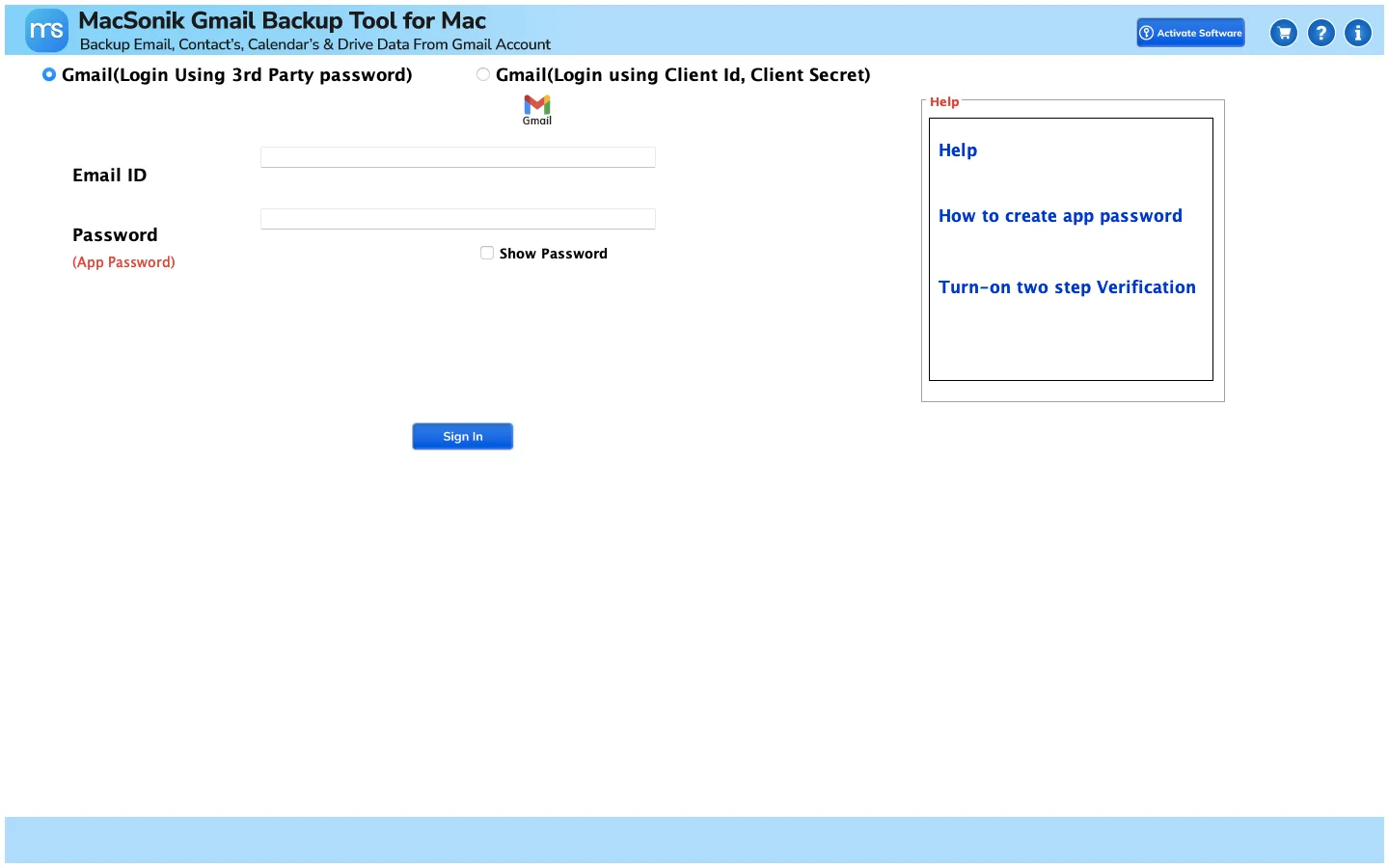
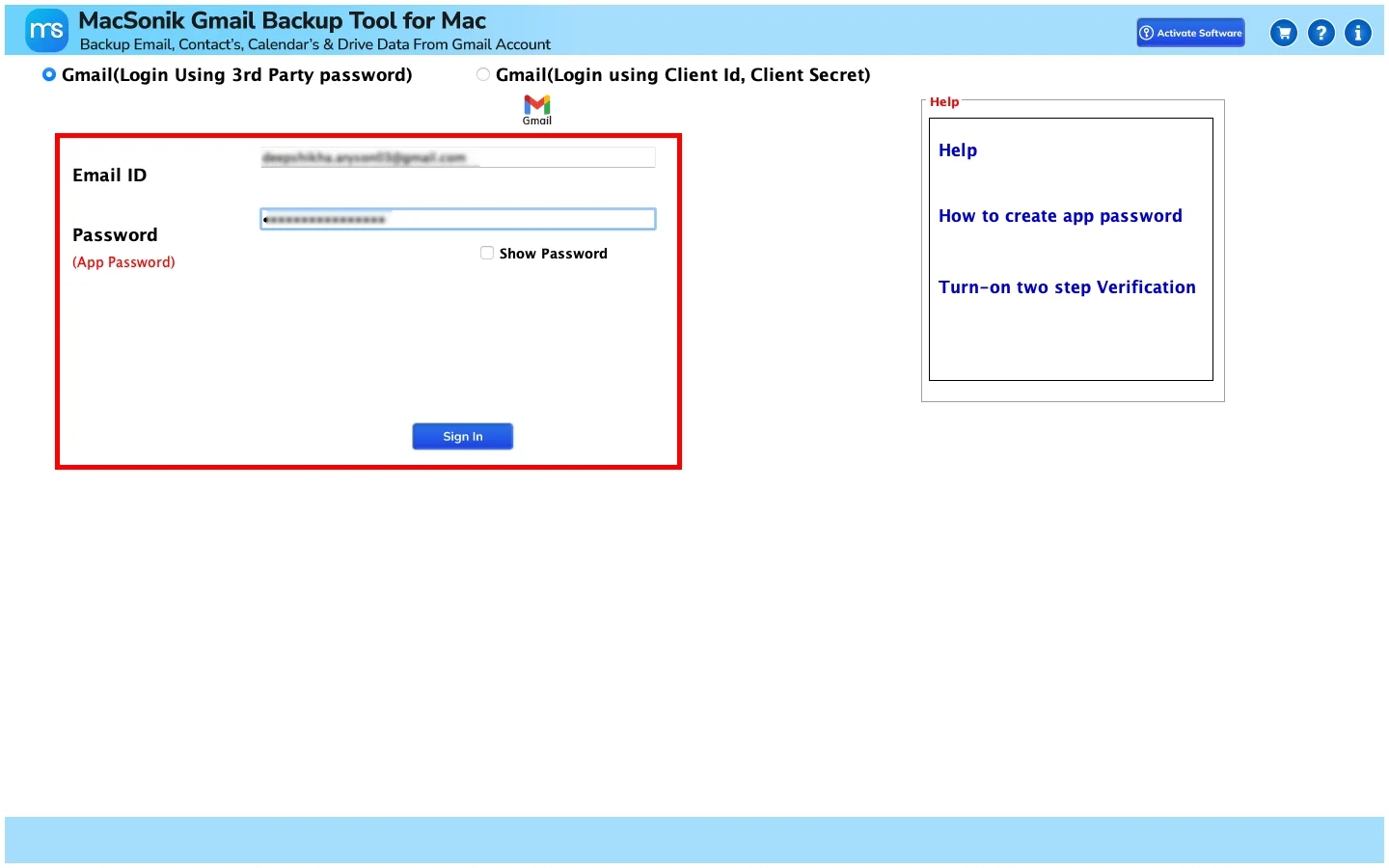
- Sign in using the Gmail Account valid credentials.
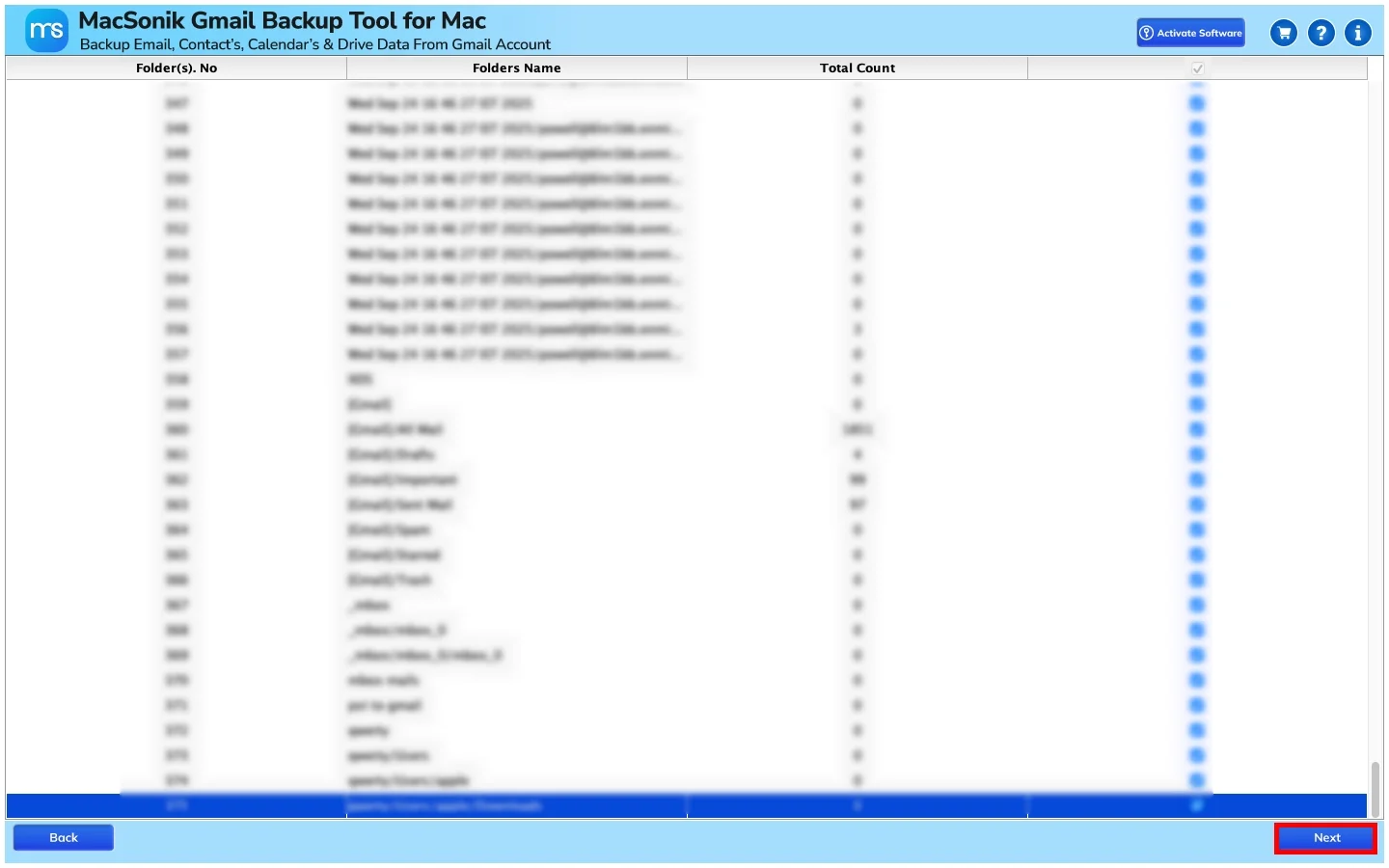
- Now, let the software load the saved data and click Next.
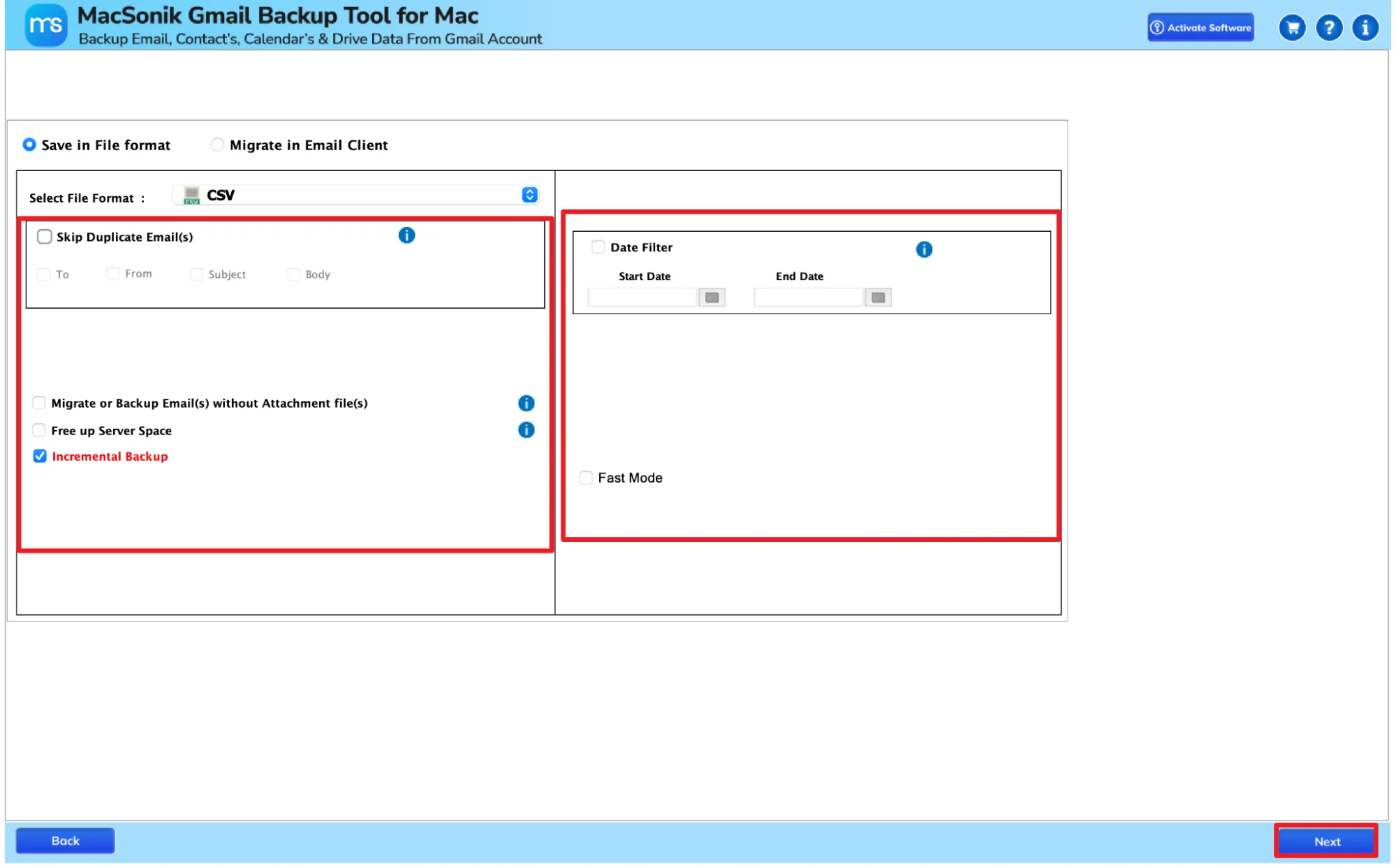
- Afterward, choose CSV as the saving file format.
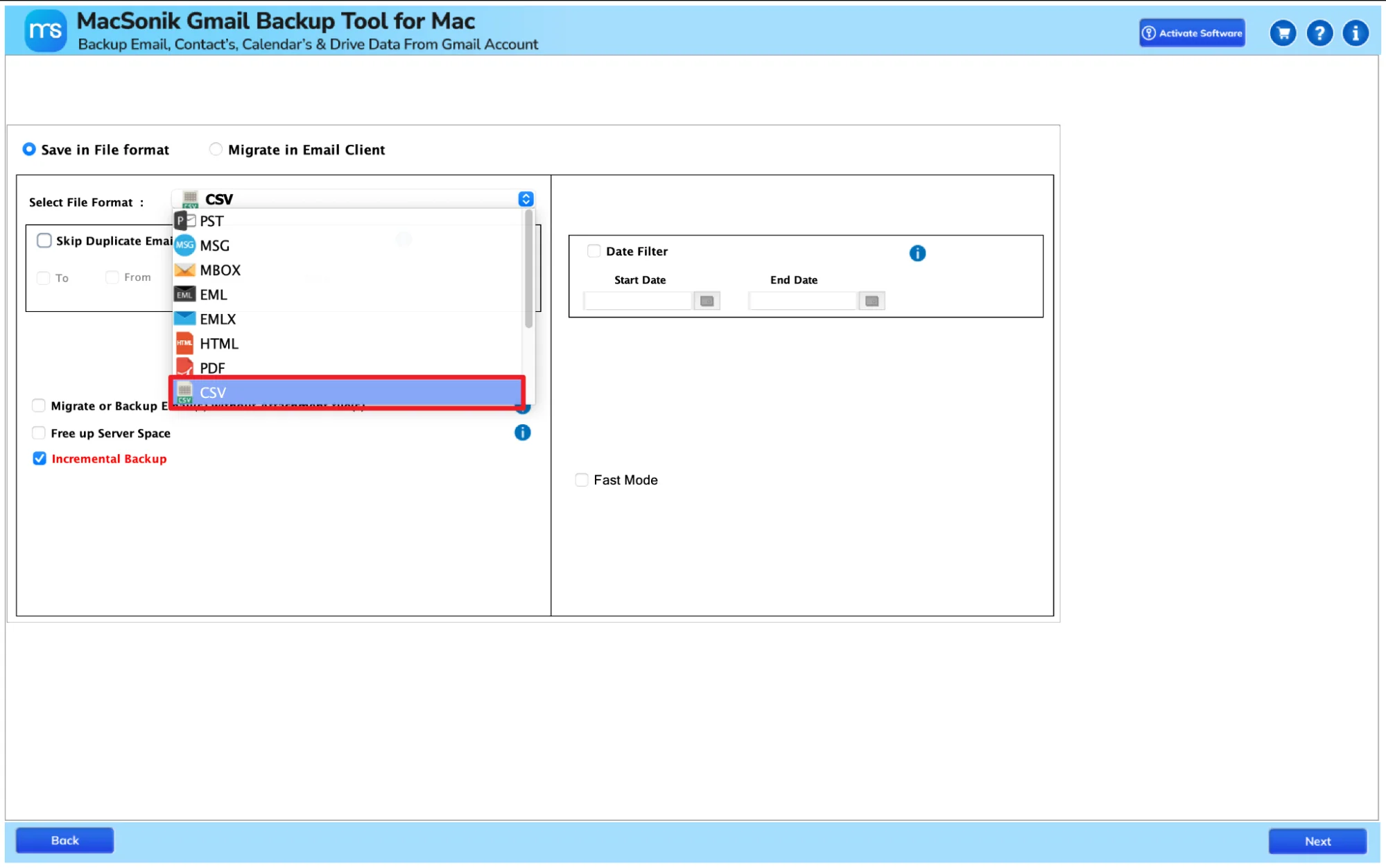
- Finally, apply the additional filters and click Next to begin the process.
Real-Life Scenario: Customer Support Reporting
A customer support company stored years of communication inside Gmail accounts and needed email data for monthly performance reports and record management. However, the manual export methods created incomplete spreadsheets and required extensive editing. The team then used the MacSonik Gmail Backup solution to download Gmail data into CSV. As a result, email data became organized, searchable, and ready for reporting while attachments remained properly managed.
Final Thoughts
In this blog post, exporting Gmail emails to CSV is useful for reporting, record management, and business analysis. However, the manual methods may work for small exports but often become complex and time-consuming for large mailboxes. Therefore, using a professional Gmail export solution is the most reliable method to export Gmail emails to CSV. Additionally, it offers a fast, secure, and accurate conversion on Mac. Apart from this, if you face any kind of difficulty during the process, you can reach out to our support team anytime.
Frequently Asked Questions
Ans. Yes, all Gmail emails can be exported to CSV at once depending on the method or software used. Manual methods may require additional processing, while a professional Gmail export tool supports bulk export and helps manage large mailboxes more efficiently.
Ans. Google Apps Script can be used to extract Gmail message data such as sender, subject, and date into spreadsheet format through custom scripting. However, this method requires coding knowledge and configuration. It may also involve limitations when handling large mailboxes or attachment data.
Ans. CSV exports generally include email details such as sender, recipient, subject, date, and message-related information. Since CSV is a structured spreadsheet format, attachments are usually stored separately or referenced rather than embedded directly inside the file.
Ans. Yes, the MacSonik Gmail backup tool allows selective export of Gmail folders, labels, or date ranges. This helps users export only required email data instead of the complete mailbox, saving time and improving organization.
About The Author:
I am Neeru Kuchhal, a Technical Content Writer who focuses on turning complex ideas into clear, engaging, and impactful content. I combine creativity with strategy to write blogs, web content, and technical articles that connect with the right audience and support brand goals. I believe great content is not just written. It is thoughtfully created to inform, build trust, and drive action.
Related Post