Split Large PST Files into Smaller Files: Complete Guide (2026)

Neeru Kuchhal

June 17th, 2026
User-Query:
“My Outlook PST file has grown to about 48 GB over the past few years, and Outlook has started becoming slow. I see that my ‘Outlook is not responding’ messages. My mailbox contains roughly 180,000 emails, including large attachments. I want to split large PST files into smaller files without causing corruption. What’s the best way to do it?”
— Asked by ‘Jonathan Reed’
Introduction: Microsoft Outlook uses a PST file to store mailbox data such as emails, contacts, calendars, notes, tasks, and attachments. Over time, as mailbox data increases, PST files can become oversized, making Outlook slower and increasing the risk of corruption. Large PST files often lead to performance issues, delayed searches, and even file access errors. Splitting a large PST file into smaller ones is the best way to improve mailbox management. This guide outlines the effective methods to split PST file into smaller parts in 2026. Moreover, it also covers the MacSonik PST Splitter Tool for quick processing.
Why You Need to Split Large PST Files?
There are several reasons why users need to split large PST files into smaller files:
- Improves Outlook performance.
- Reduces file corruption risk.
- Makes backups easier.
- Simplifies mailbox organization.
- Speeds up email search.
- Reduces loading time.
- It helps manage archived emails efficiently.
- Also, Outlook archive not reducing mailbox size.
Traditional Techniques to Break PST Into Smaller Files
You can use the built-in features to complete this task. Here are the steps to execute the process.
Technique 1: Archive Old Emails
One of the simplest ways to reduce PST size is by archiving older emails.
- First, open Microsoft Outlook.
- Click File and then Info.
- Select Tools and Clean Up Old Items.
- Choose folders to archive.
- Set a date range.
- Save the archive PST file.
Method 2: Create Multiple PST Files Manually
Users can manually move emails into new PST files.
- Open Outlook.
- Create a new PST file.
- Create folders inside the new PST.
- Move selected emails into it.
- Repeat as needed.
Method 3: Split by Date or Folder
Organizing mailbox data by year, project, or department can simplify management.
Common Split Criteria:
- By date (year/month)
- By folder
- By sender
- By project
- By mailbox size
Challenges: Manually Split Large PST Files into Smaller Files
- It is very time-consuming.
- Requires Outlook installation.
- There is a risk of accidental deletion.
- Difficult to maintain folder hierarchy.
- Large files may freeze during movement.
- Moreover, no automation for bulk splitting.
| Get Hands-On Experience: Use the demo version of the MacSonik PST Splitter tool to verify its capabilities before purchase. |
Why Experts Recommend MacSonik Tool for Advanced Users?
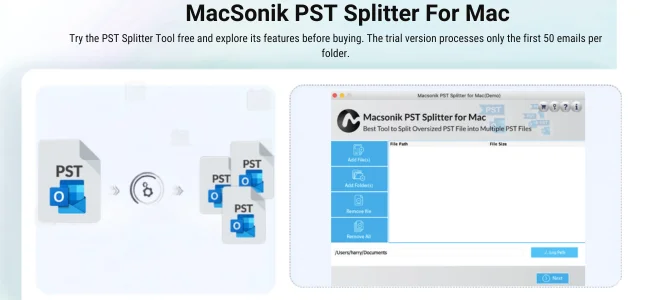
The MacSonik PST Splitter Tool provides an optimized solution to split Outlook PST file into smaller parts. It ensures the complete process without affecting the mailbox integrity. This solution splits the large PST files simultaneously with zero data loss and enterprise-grade security. Additionally, it guarantees the mailbox data and formatting are intact.
Instructions to Split Large PST Files into Smaller Files
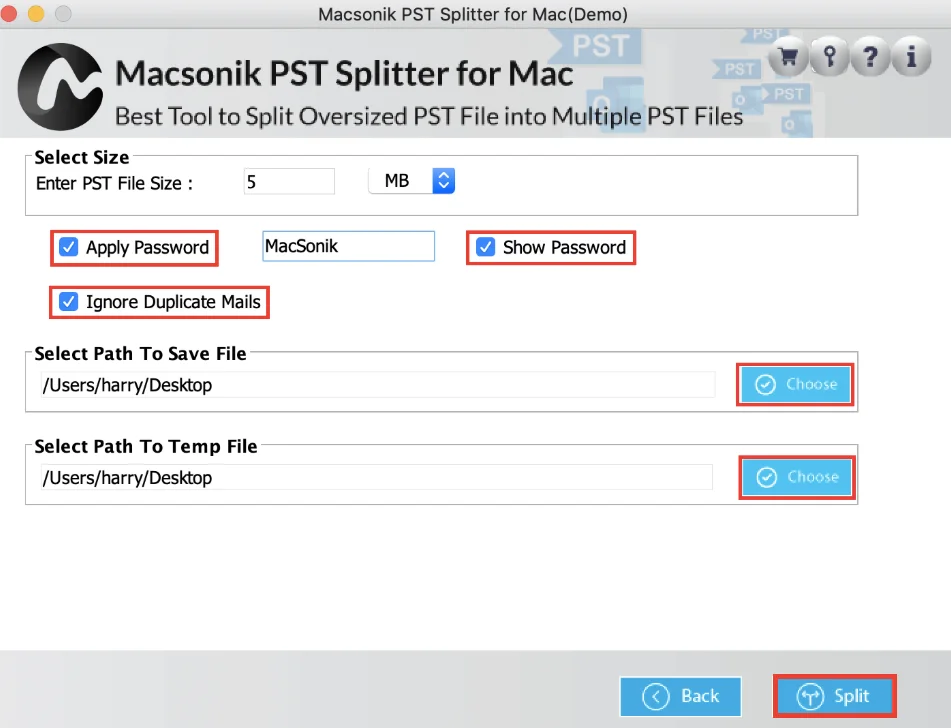
- Firstly, start by launching the MacSonik PST Splitter Tool.
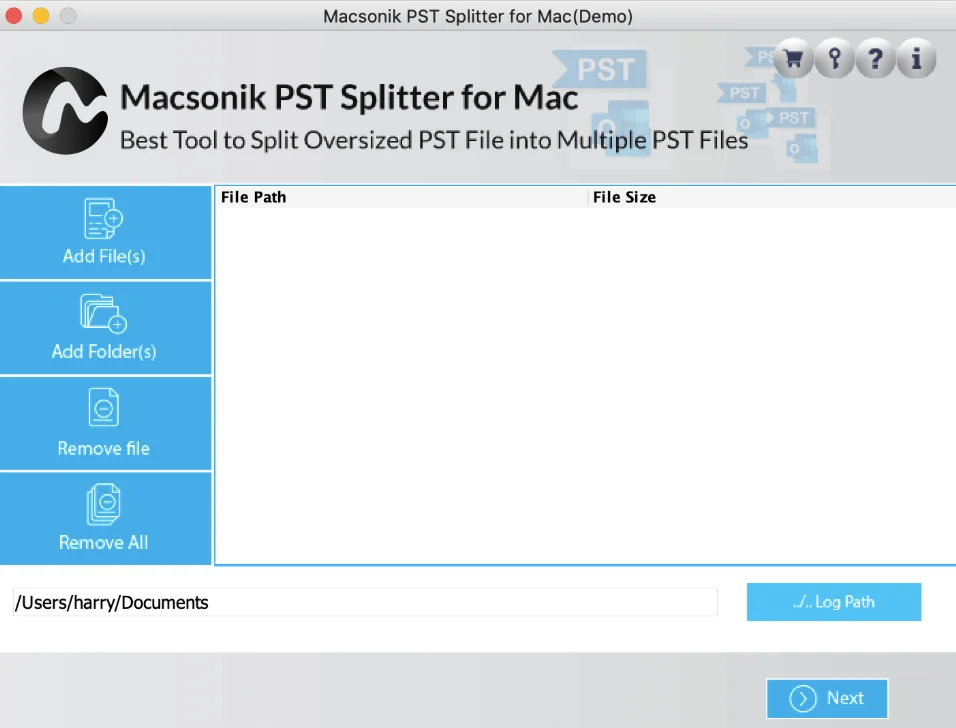
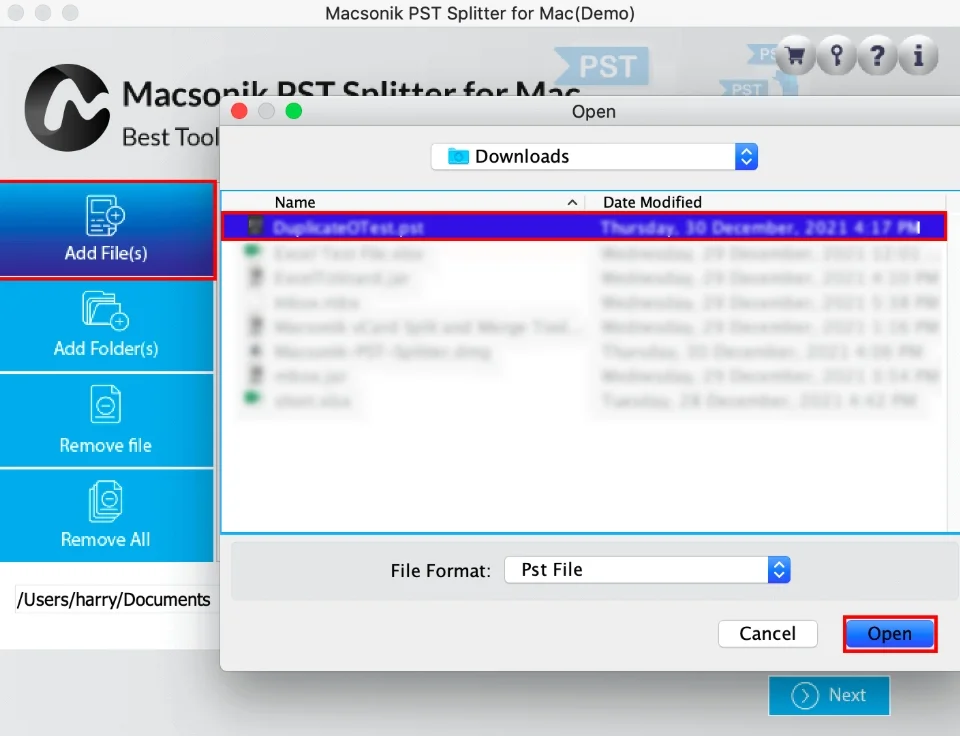
- Now, click Add Files and load the PST file that you want to split.
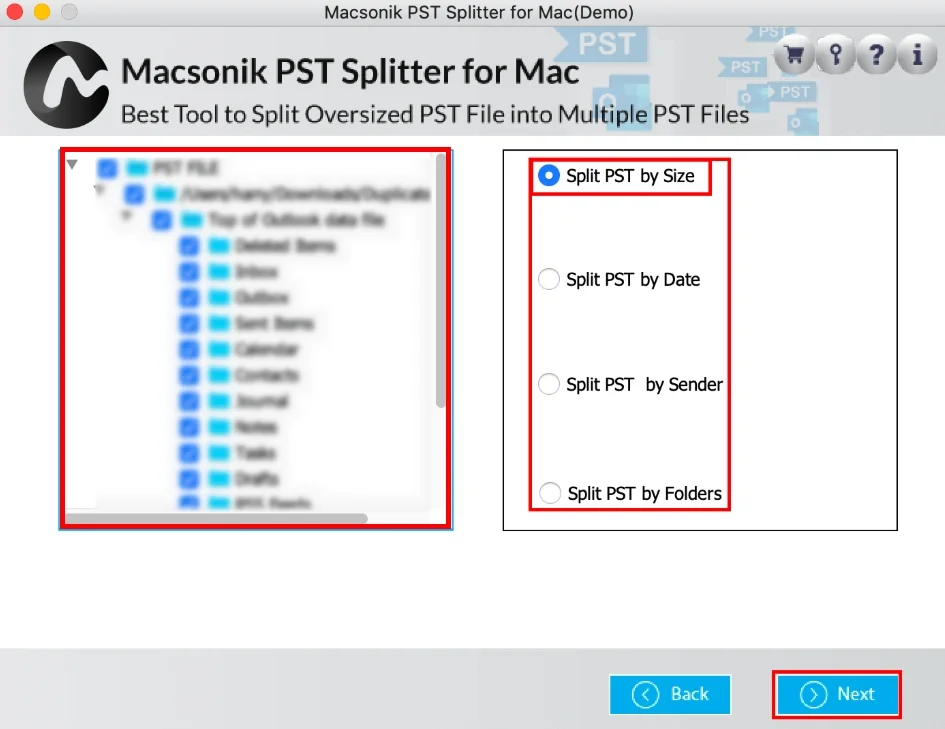
- Choose the splitting criteria as per your requirement.
- Set the destination path and start the splitting process.
Real-Life Case Study
An HR manager had a 45GB PST file containing years of employee communication and records. Outlook became extremely slow, and searching for emails took several minutes. By splitting the PST into yearly archives, the manager improved Outlook performance, reduced loading time, and organized employee communication more efficiently.
Conclusion
In the end, oversized PST files can slow down Outlook, increase corruption risks, and make mailbox management difficult. Splitting large PST files is an effective way to improve performance and maintain mailbox stability. While Outlook offers manual methods, they can be slow and difficult for large mailboxes. For more organized PST management, a dedicated PST splitting solution provides a secure approach to split large PST files into smaller files.
Frequently Asked Questions
Ans. Yes, PST files can be split by date range. This method allows you to separate emails based on specific years, months, or custom date intervals, making mailbox management easier and improving file organization.
Ans. Yes, you can split a PST file by folder. This means mailbox folders such as Inbox, Sent Items, Drafts, or custom folders can be separated into individual PST files for better accessibility and management.
Ans. Yes, large PST files over 50 GB can be split into smaller files using a specialized PST splitter tool. Splitting oversized files helps reduce corruption risks, improves Outlook performance, and makes backup management more efficient.
Ans. Yes, orphan and archived PST files can also be split. Since these files are independent of an active Outlook profile, a dedicated PST splitting tool can process them directly while preserving emails, attachments, folder hierarchy, and metadata.
About The Author:
I am Neeru Kuchhal, a Technical Content Writer who focuses on turning complex ideas into clear, engaging, and impactful content. I combine creativity with strategy to write blogs, web content, and technical articles that connect with the right audience and support brand goals. I believe great content is not just written. It is thoughtfully created to inform, build trust, and drive action.
Related Post