Simple Guide to Convert CSV to vCard (VCF) Format on Mac

Amelia James
February 24th, 2026
User-Query:
I have a large CSV file containing hundreds of contacts exported from Excel, and I need to convert it into a vCard (VCF) file for importing into my iPhone and email client. Can anyone suggest a reliable and easy method to convert CSV file data to vCard in bulk without losing contact details?
Summary: Apple’s iCloud is notoriously strict, refusing to import the CSV files directly. Hence, it is better to convert CSV to vCard, which is a native language for Apple devices. But what is the correct way to convert your CSV files into a vCard file? This technical blogpost will discuss various approaches that accurately convert the CSV files to a vCard file format. We will introduce a professional tool, the MacSonik CSV to vCard Converter. With this tool, users can convert either a single CSV or multiple CSV files into vCard simultaneously.
Benefits of Converting CSV to VCF File Format
Organizations convert CSV to VCF as it preserves all the essential details and supports portability. Below are the reasons why it is beneficial to convert CSV files to a VCF format:
- The vCard file format is widely supported. Users can effortlessly import contacts into their mobile devices.
- Migrating the contact data becomes smooth when converting the CSV contacts to vCard format.
- Users can easily manage a large contact list efficiently through mass contact migration, saving effort and time.
- VCF format is compatible with various email programs such as Outlook, Apple Contacts, and contact management tools.
- Contacts in vCard format ensure accuracy by converting data instead of manually typing it.
How to Efficiently Convert CSV to vCard Format?
There are two options to convert your CSV files into a vCard format. Let us execute the solutions and look at their pros and cons.
Export CSV File to VCF Format in Apple Contacts
In macOS, the Contacts app enables users to first import the CSV file and then export it into the VCF file format.
Look at the steps to begin the process of converting to vCard:
- To start, you should open the Contacts program that comes installed with macOS.
- Then select File > Import from the menu and choose the .csv file that contains your contact entries.
- After importing this file, you will need to match up all of the fields from .csv to the equivalent fields in Contacts.
- Once this is done, choose File > Export > Export vCard and specify a location for the VCF file on your computer.
- Finally, click on Save to store the resultant vCard (VCF) file.
Convert CSV Contacts to vCard Using Google Contacts
This method involves importing the CSV file through Google Contacts in the default web browser. After that, we’ll export it as a vCard (VCF) file.
The following are the instructions to initiate the process:
- In the default web browser, go to Google Contacts in your web browser.
- Then, sign in to your Google account credentials.
- After that, click on Import Contacts, select the CSV file, and add it.
- Once the contacts are imported, navigate to Export Contacts and choose vCard (VCF) as the export format.
- Next, click on the Export button, and the VCF file will be downloaded.
Issues with the Manual Methods
- The above process requires users to correctly map the fields; otherwise, the data will not be imported correctly.
- If the CSV contact lists are large, it may take a significant amount of time.
- Some of the CSV formats will not get recognized by the Contacts app.
- Complex CSV structures will not be handled automatically.
A Simple and Faster Solution to Convert CSV to vCard Format
The MacSonik CSV to vCard Converter is a feature-rich solution that converts CSV files into a vCard format. It simplifies bulk conversion of CSV files, allowing entire folders of CSV files to be processed at once, without altering the data. This tool also import CSV contacts to iCloud, adding flexibility for cloud-based migration. Also, it allows users to map the fields either automatically or manually to ensure accuracy. Furthermore, the tool supports different vCard versions for broader compatibility.
Simple steps to convert CSV to VCF:
- Download, install, and open the converter tool.
- Then, select the Add File or Add Folder option to select Single CSV file or a folder having CSV files.
- Also, select the Save Options as vCard. Click Next to continue.
- After that, click on Add to map the CSV field with the vCard field.
- Click Next. Choose the export and the vCard version options.
- At last, hit the Convert button to start the CSV to vCard conversion.
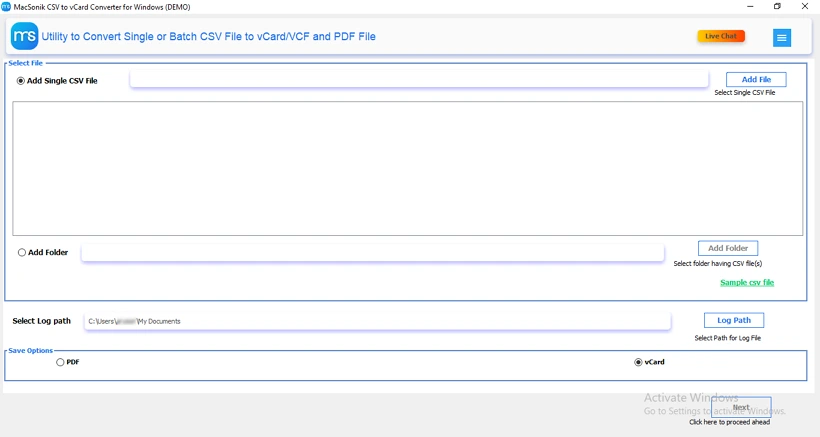
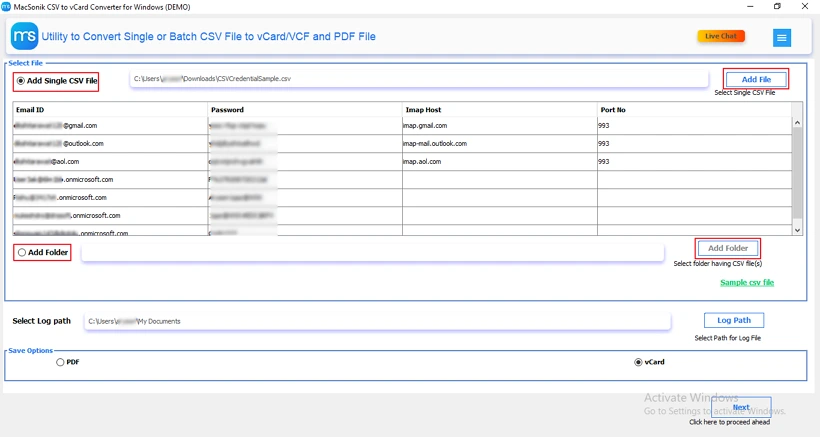
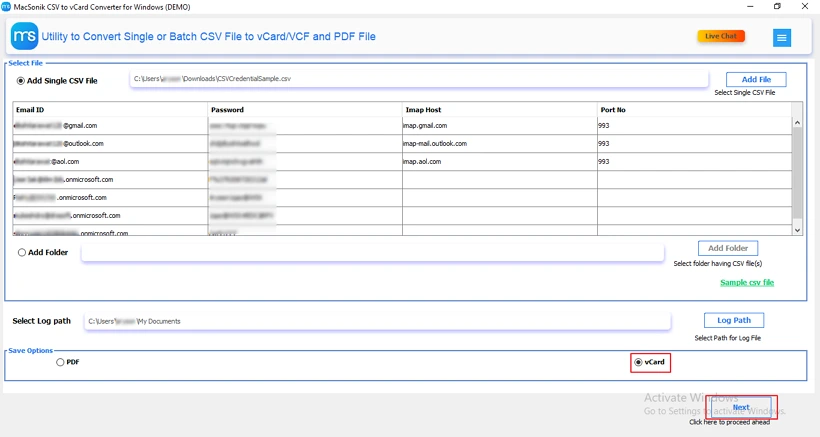
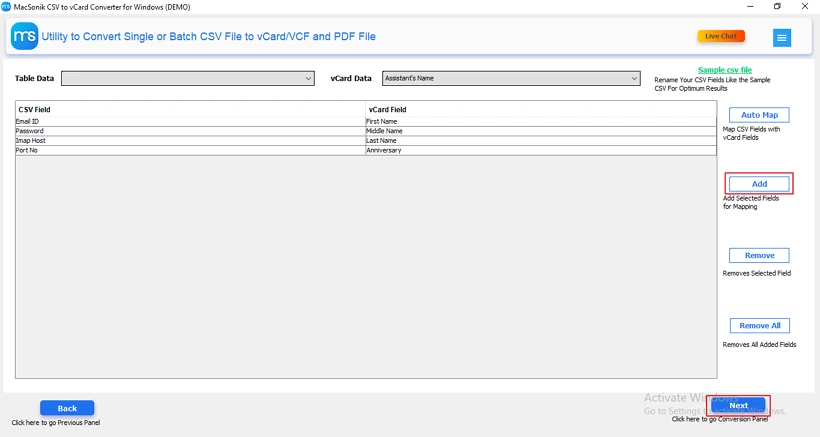
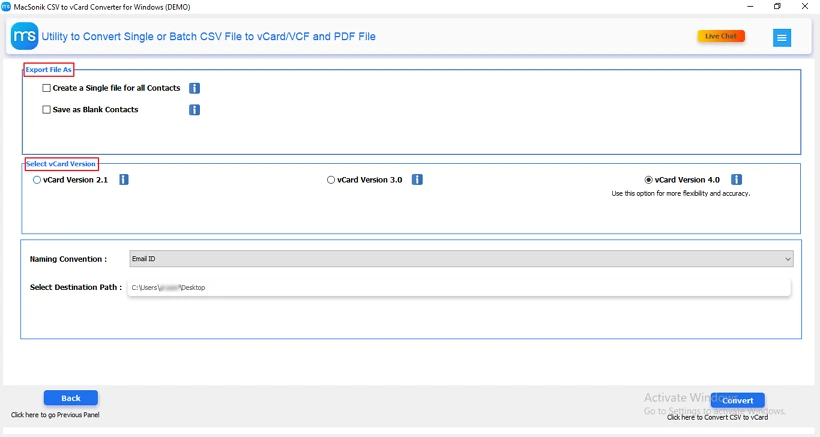
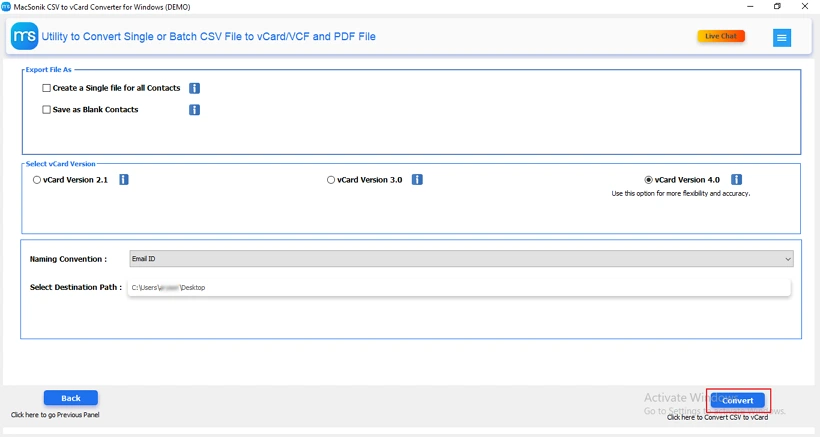
A user had thousands of client contacts saved in a CSV file and needed them in vCard format for his iPhone. Instead of converting them manually, he used the MacSonik CSV to vCard Converter on his Mac. He selected multiple CSV files at once and used the field mapping option to align contact details properly. Within minutes, the tool converted all contacts into a single VCF file without altering the original data, allowing him to import them into his devices.
Conclusion
The CSV to VCF file conversion makes the contact management and data migration effortless. This conversion is beneficial for both business and individual contact management. In this technical blogpost, we have listed methods to convert CSV to vCard (VCF) format. The user can try both manual solutions and professional solutions using the CSV to VCF Converter. With this tool, users can be assured of authentic, reliable, and error-free contact data conversion.
Frequently Asked Questions
Ans- To convert a CSV file to VCF in bulk, use a professional converter that supports batch conversion and allows you to upload multiple files or an entire folder at once. The tool will process all selected CSV files simultaneously and export them into vCard (VCF) format without altering the original data.
Ans- On a Mac, open the Contacts app, select the contacts you want, then click File > Export > Export vCard to create a VCF file. Choose the destination location, and macOS will save the contacts in .vcf format for easy sharing or import.
Ans- The best method to convert CSV File to vCard is by using a professional MacSonik CSV to vCard Converter that supports bulk conversion and accurate field mapping. This ensures fast processing, maintains data integrity, and provides compatibility with multiple vCard versions.
About The Author:
Amelia is the mistress of the webmail clients like Office 365, Gmail, Yahoo, Hotmail, and Opera Mail. Her research on downloading emails from webmail is outstanding. She has given the solution to download emails from webmail clients to a Mac device with all the mailbox items. She’s been into webmail solutions since 2010. In her free time, she reads books and writes technical blogs.
Related Post